If you’ve ever stood in your laundry room wondering why your dryer bill looks different from your neighbor’s, or you’re shopping for a replacement and keep seeing “gas” and “electric” models side by side, you’re not alone. Most Tampa homeowners use their dryer several times a week without ever thinking about what’s actually happening inside it – until something goes wrong, or they smell something they shouldn’t.
In this guide, we’ll break down exactly how a gas dryer works, how it’s different from an electric one, how to quickly tell which type you own, and what warning signs mean it’s time to call a professional.
How a Gas Dryer Actually Works
A gas dryer and an electric dryer do the exact same job – tumbling wet clothes through heated air until the moisture evaporates – but they generate that heat in completely different ways.
Here’s the step-by-step process inside a gas dryer:
- Air intake:- The dryer pulls in room-temperature air through a vent.
- Ignition:- A small igniter (usually electric) heats up and lights the gas supplied through a dedicated gas line connected to your home’s natural gas or propane system.
- Burner activation:- Once the igniter reaches the right temperature, a valve opens and gas flows to the burner, creating a controlled flame inside a sealed burner assembly.
- Heat exchange:- The flame heats the air inside a combustion chamber. This hot air is then blown into the drum – never the open flame itself so your clothes are only ever exposed to hot air, not fire.
- Tumbling and drying:- The drum rotates, tumbling your clothes through the heated air while a thermostat monitors the temperature and cycles the burner on and off to maintain the right heat level.
- Exhaust:- Moist air, along with the combustion byproducts from the burner, is pushed out through the exhaust vent to the outside of your home.
The key difference from an electric dryer is step 2 through 4. An electric dryer uses heating coils (similar to a toaster) powered directly by electricity to generate heat there’s no flame, no gas valve, and no combustion byproducts to vent. A gas dryer, on the other hand, needs a functioning gas connection, a working igniter, and a properly vented exhaust system to operate safely.
This is also why gas dryers dry clothes faster and typically cost less to run per load natural gas is generally cheaper than the equivalent electricity needed to produce the same heat. The tradeoff is that a gas dryer requires professional installation and periodic safety checks, since it involves a live gas connection inside your home.
Gas Dryer vs. Electric Dryer: How to Tell Which One You Have
If you’re not sure what’s tucked behind your dryer, here are the fastest ways to check:
Look at the power cord:- Electric dryers use a large, thick cord with either a 3-prong or 4-prong plug, plugged into a heavy-duty 240-volt outlet – similar to what an oven or an EV charger uses. A gas dryer uses a standard 120-volt plug that looks like something you’d plug a lamp or television into.
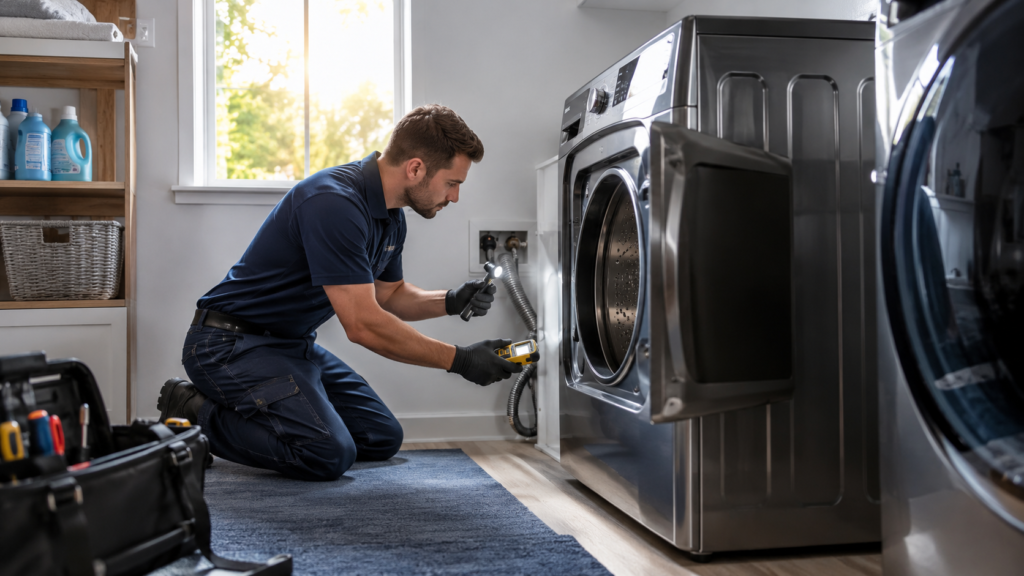
Check behind the unit:- A gas dryer will have a flexible gas connector line running from a shutoff valve on the wall to the back of the machine, in addition to its power cord. If you see a copper or braided line with a shutoff valve, you have a gas dryer.
Smell test:- Gas dryers occasionally give off a very faint gas odor when the burner ignites, especially at the very start of a cycle. This should be brief and subtle a strong, persistent odor is not normal and is covered below.
Check the nameplate:- Every dryer has a manufacturer’s label, usually inside the door or on the back panel, that lists the fuel type, model number, and BTU rating (gas dryers only). If you see a BTU rating, it’s gas.
Utility bill comparison:- If your gas bill fluctuates noticeably with laundry usage but your electric bill stays flat, that’s a good sign you’re running a gas dryer.
Signs Your Gas Dryer Needs Professional Attention
Because a gas dryer is connected to a live fuel line, certain warning signs should never be ignored:
- A persistent rotten-egg smell near the dryer or the utility connection this is the added odorant in natural gas and is a strong indicator of a leak.
- The dryer takes much longer to dry clothes than it used to, which can point to an ignition or burner problem.
- A burning smell that isn’t lint-related, or visible scorching near the burner assembly.
- Yellow or flickering flame if you can see the burner (it should burn blue and steady).
- Unusual clicking without ignition, meaning the igniter is trying to light the burner but gas isn’t reaching it properly, or the valve isn’t opening.
- Visible corrosion or damage on the flexible gas line behind the unit.
If you notice any of these, don’t attempt to inspect the gas connection yourself. Turn off the dryer, and if you smell gas, shut off the gas supply at the valve, leave the house, and call your gas utility or a licensed professional immediately. For anything short of an active leak — like a slow-drying dryer or ignition issues — a dryer gas line inspection from a licensed technician is the safest way to diagnose the issue without risking a DIY mistake on a live gas connection.
Why Gas Dryer Connections Need a Professional Touch
Unlike swapping out an electric dryer, installing or servicing a gas dryer isn’t a plug-and-play job. It involves:
- Connecting to an existing gas line or running a new one to the laundry area
- Installing and testing a proper shutoff valve
- Verifying the flex connector is rated and undamaged
- Checking for proper venting so combustion byproducts exit the home safely
- Pressure-testing the connection to confirm there are no leaks before the unit is ever turned on
This is exactly the kind of work our team handles as part of our appliance hook-up services – whether you’re installing a brand-new gas dryer, relocating your laundry room, or replacing an old flex line that’s showing signs of wear. If you’re upgrading from an electric dryer to a gas model for the energy savings, you’ll also need a certified technician to confirm your home has an existing gas line nearby or determine what it takes to run one safely.
What to Do If You Suspect a Gas Leak Near Your Dryer
A faint gas smell right when the burner ignites is normal. A strong or lingering odor is not. If you ever suspect a leak anywhere in your home – not just near the dryer – here’s what to do:
- Don’t turn any switches, lights, or appliances on or off.
- Open windows and doors if it’s safe to do so on your way out.
- Leave the home immediately and move to a safe distance.
- Call your gas utility or 911 from outside the house.
- Contact a licensed gas technician to inspect and repair the issue before reconnecting anything.
We cover the full decision tree for this exact situation in our guide on who to call for a gas leak, and our step-by-step guide to checking for a gas leak in your house walks through exactly what to look and smell for throughout your home, not just around appliances.
The Bottom Line
A gas dryer works by igniting natural gas or propane to heat air, then blowing that heated air through your clothes as the drum tumbles – a faster, often cheaper way to dry laundry compared to electric models, but one that depends on a safe, properly maintained gas connection. Knowing whether you have a gas or electric dryer takes about thirty seconds of checking the cord and connections behind the unit, and knowing the warning signs of a gas dryer problem can prevent a small issue from becoming a dangerous one.
If your gas dryer is taking longer to dry, making unusual noises, or you’ve noticed any odor near the connection, it’s worth having it looked at before it becomes an emergency gas leak repair situation. Our licensed technicians serve homes throughout Tampa and the surrounding area, and we’re available for inspections, installations, and repairs whenever you need us.
Smell gas near your dryer or anywhere else in your home? Don’t wait. Call Tampa Gas Leak Pros at (813) 742-0590 for fast, licensed, 24/7 service.
Leave a Reply